Grammar 2: the fucking sounds
In the first lesson, we studied the basics of the language: its first building block, the alphabet. Now we’re going to move on to the most interesting part: sounds. I could create hundreds of lessons on how this or that sound is pronounced, but we’re going to keep it general, do it well, and be precise. If you’re consistent enough, by the end of this lesson you’ll be able, more or less, to read texts in French.
Vocabulary: Pronouns
The song ( you'll get used to it )
Today’s music pick is a gentle little song, a sweet treat, a timeless track, by one of the greatest lyricists in French music (even though he’s Belgian, because French is also spoken in Belgium too : P ). If you want to practice reading and pronunciation, it’s perfect!!!! It's " Ces gens-là" of Jacques Brel
Feel free to share your own versions of your interpretations with us XD
The movie ( Available on netflix )
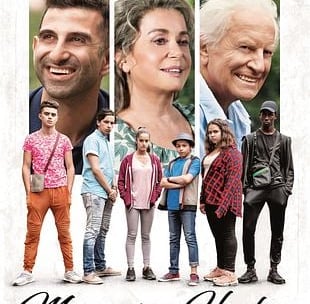

Mauvaise herbe :Waël, a former street kid, lives in the Paris suburbs off small scams he pulls with Monique, a retired woman who is clearly very attached to him.
His life takes a turn the day one of her friends, Victor, offers him, at Monique’s insistence, a small volunteer job at his center for children who have been excluded from the school system.
Waël gradually finds himself responsible for a group of six teenagers who were expelled for truancy, insolence, or even carrying a weapon.
From this explosive meeting between “bad seeds,” a real miracle will be born.
The Recipe
I’m a big foodie, so I’m going to keep sharing recipes with you until you’ve had enough. Today, a simple recipe, a comforting recipe, a flavorful recipe, a recipe for everyone: quiche (but this version is with turkey).
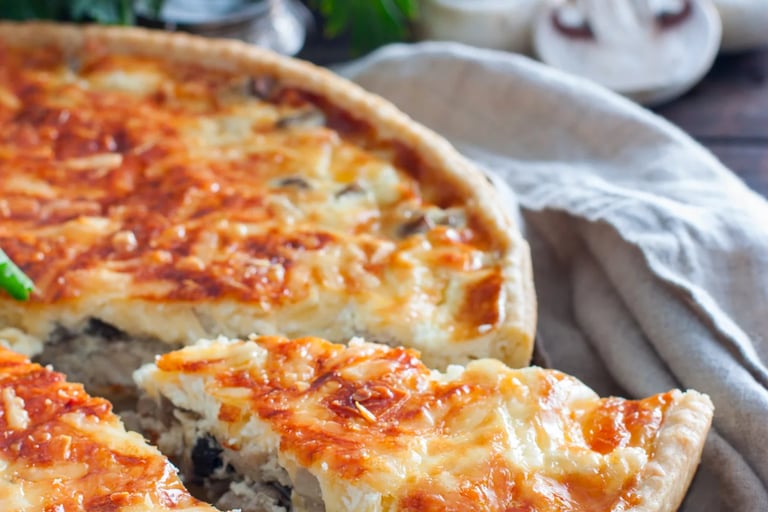
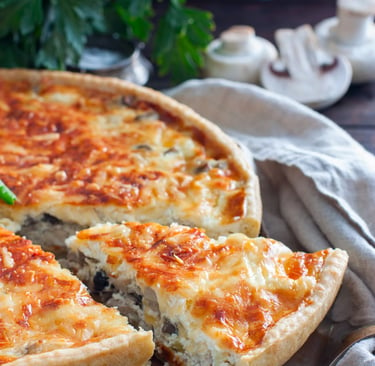
Turkey and Mushroom Quiche (Quiche à la dinde et aux champignons) — Serves 6 (6 personnes)
Prep time : 20 minutes
Cook time : 40 minutes
Difficulty : Very easy
Cost (Coût): Budget-friendly
Ingredients (Ingrédients)
1 shortcrust pastry (pâte brisée)
200 g cooked turkey leftovers (restes de dinde cuite)
250 g mushrooms, button mushrooms or chanterelles (champignons, champignons de Paris ou girolles)
1 onion (oignon)
30 g butter (beurre)
3 eggs (œufs)
200 ml crème fraîche (crème fraîche)
100 ml milk (lait)
100 g grated cheese, Comté or Gruyère (fromage râpé, comté ou gruyère)
Salt, pepper, ground nutmeg (sel, poivre, noix de muscade)
Preparation (Préparation)
Preheat the oven to 180°C (350°F). Unroll the shortcrust pastry into a tart pan and prick the base with a fork.
Clean the mushrooms and slice them. Thinly slice the onion. Sauté them in a pan with the butter until golden, and until the mushrooms’ water has evaporated.
Cut the cooked turkey into small pieces and add it to the mushroom-onion mixture to warm it slightly.
In a bowl, beat the eggs with the crème fraîche and milk. Season with salt, pepper, and a pinch of nutmeg.
Spread the turkey and mushroom mixture over the pastry base. Pour the egg mixture on top, then sprinkle with grated cheese.
Bake for 35 to 40 minutes, until the quiche is nicely golden.
Let it cool for a few minutes before serving.
So, let’s get straight to the point: the different consonants (B, C, D, F, H, J, K, L, M, N, P,Q, R, S, T, V, W, X, Z) are pronounced the same as in English. The only exceptions are (G, Q).
So, G is pronounced like the English hard g before the vowels (u, a, o) and before other consonants. However, before the other vowels, it sounds like the soft g, as in “George.”
But if you have g + u, it becomes the hard English g again.
And if you have g + e, it becomes the soft g again.
So we’ll use “girl” for the hard g, and “George” for the soft g.
Small reading exercise: pronounce the following sounds (you’ll see the answers just below):
1 ga, 2 ge, 3 gui, 4 go, 5 gui, 6 geo, 7 gi, 8 gu
The answer is just below. Please hover over the button
For the letter Q, it is always pronounced like a K in English, but it is generally written with a U.
Examples: qua (ka), quo (ko), que (ke), qui (ki).
And for all my English-speaking friends who worry about the pronunciation of R: let’s say it’s not a big issue. You’ll learn it by imitating French speakers who pronounce the letter R, and it will come naturally.
Why learn pronouns first? Because if you know your pronouns well, you can make mistakes in verb conjugation and still be more or less understood. Practice repeating them until you know them by heart. It may seem like a tedious exercise, but there are only eight, so half a day should be enough. So we have:
I: je (soft g sound—“George” sound, remember? (●'◡'●))
you: tu
he / she: il / elle (il for male, elle is read “el” for female)
we: nous ( ous sounds like ou in you )
you (plural/formal): vous ( same )
they: ils / elles (you read them exactly like il and elle)
Let me introduce an important (and widely hated) concept in French… gender. Unlike English, we decided to give a gender to words. For now, it’s not a problem—we’ll learn it little by little. Even French people make gender mistakes. ;)

Contact
If you have questions, expectations, or you want additional courses, you can contact me by email :
Adresse
contact@frenchistude.com
© 2025. All rights reserved.